
Brand and offer context
Your audience, services, voice, visuals, and approval rules should be available before any campaign starts.
AI MARKETING FOR SMALL BUSINESS
Markethink connects campaign planning, content, website updates, approvals, leads, CRM follow-up, and weekly learning. AI provides the speed and consistency. Expert marketers direct the strategy, review the work, and stay accountable.
THE REAL BUSINESS NEED
A small business owner usually does not need another marketing app. They need clearer offers, more consistent content, better follow-up, a website that keeps pace with the business, and fewer stalled campaigns.
AI can help with speed. But speed alone does not solve the real problem. If the offer, voice, audience, assets, approvals, leads, and follow-up live in different places, every new campaign still starts with missing context.
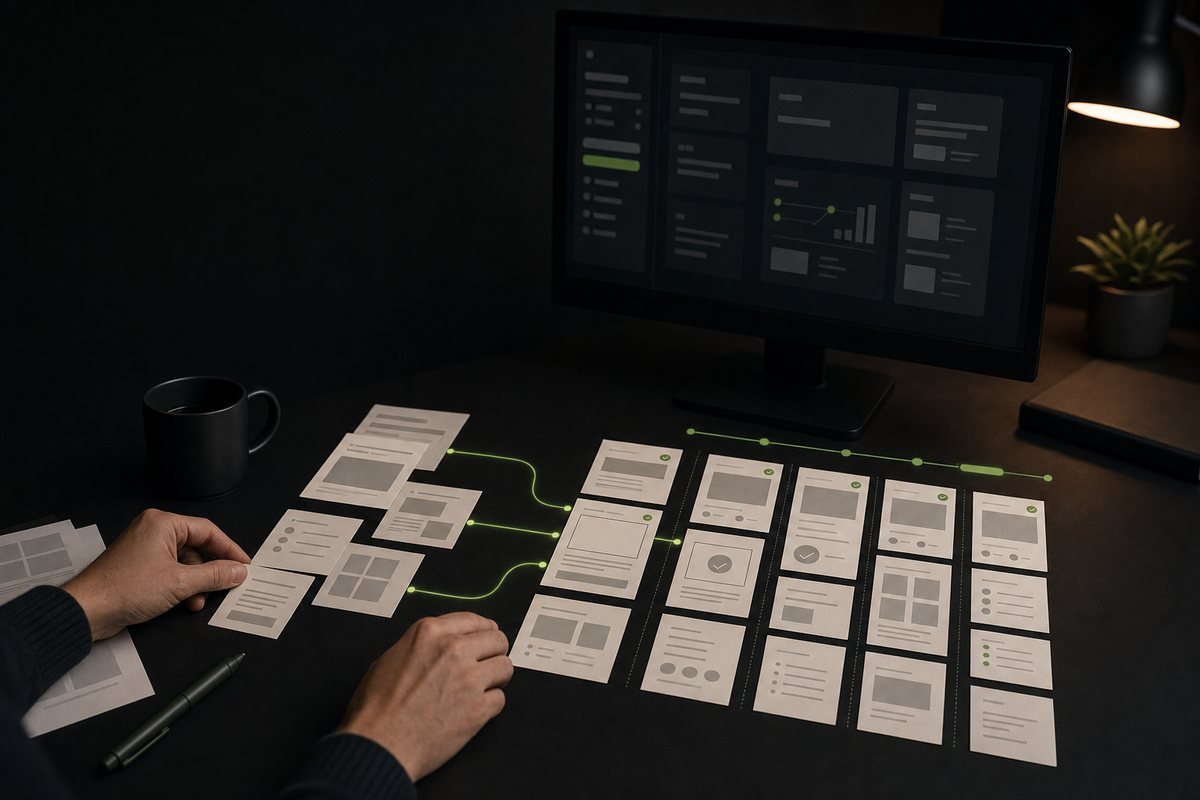
Markethink turns AI-supported marketing into a weekly operating system: learn the business, organize the campaign, create the assets, review the work, capture leads, support follow-up, remember what changed, and keep improving.
WHAT A SMALL BUSINESS ACTUALLY NEEDS
The useful question is not “Which AI tool should we try next?” It is “What system helps our marketing ship and get sharper every week?”
Your audience, services, voice, visuals, and approval rules should be available before any campaign starts.
Ideas need a path into landing pages, social posts, blog content, email copy, and follow-up tasks.
Every edit should make the next draft sharper instead of forcing your team to repeat the same direction.
Marketing should connect to real buyer conversations, lead lists, walkthroughs, and next steps.
PRACTICAL USE CASES
Start with the work the business already needs to move. Then connect each use case to the same strategy, brand context, approval process, and follow-up path.
For sourced context on reported adoption and marketing use, review the AI marketing statistics research ledger. The evidence describes different populations and definitions, not a guarantee of effectiveness.
Turn scattered notes into a sharper positioning angle, landing-page outline, and campaign message.
Connect one business goal to the web page, social posts, blog topics, outreach, and follow-up assets it needs.
Move from blank page to reviewable copy, visuals, emails, FAQs, and lead-list ideas faster.
Spot missing proof, unclear CTAs, weak section order, and copy that does not match the buyer’s intent.
Create reply drafts, lead research notes, and next-step messages without losing campaign context.
Keep feedback from each review round so the next asset starts closer to the right direction.

THE WEEKLY RHYTHM
Markethink is built for the work small businesses need to keep moving: website updates, campaign pages, blog posts, social content, lead research, review rounds, and follow-up copy.
CHOOSE THE RIGHT MODEL
The right choice depends on whether the business needs help with one task, outsourced execution, or a connected marketing operation that improves with every approval and result.
Helpful for captions, drafts, and rewrites, but they rarely know the offer, approval history, or campaign goal.
Useful for fast creative production, but brand consistency still needs a system of references and review.
Good for publishing cadence, but they do not decide what campaign should move or whether the work is strong.
Important for follow-up, but only effective when the campaign, lead source, and next step are clear.
GOOD FIT
NOT THE RIGHT FIT
WHY TRUST THIS APPROACH
Markethink is shaped around the work that usually breaks the rhythm: unclear briefs, moving campaigns, scattered assets, slow approvals, weak follow-up, and the need to turn good ideas into shipped work.
We do not use fabricated case studies, fake counters, or inflated promises. The walkthrough starts with your business, your current marketing gaps, and the first workflow that would create momentum.
Keep building the system with these related guides:
Substantively updated August 30, 2026. This page was expanded to clarify the managed AI marketing model, practical small-business use cases, and the connection between campaign work, approvals, leads, and follow-up.
IMPLEMENTATION PLAN
The goal is not to install every tool. The goal is to create one repeatable path from business context to approved campaign work.
Look at the website, offers, active campaigns, lead flow, content gaps, and approval bottlenecks.
Do not start with every channel. Pick one offer, one audience, and one measurable next step.
Create the landing update, social posts, blog support, outreach copy, and follow-up pieces together.
Approvals, edits, and objections become memory for the next round instead of scattered chat notes.
Use what shipped, what stalled, and what buyers asked to make the next campaign sharper.
FAQ
AI marketing for small business means using modern AI capabilities to help with campaign planning, content drafts, web copy, lead research, and review workflows. The strongest approach is not a pile of disconnected tools. It is a marketing system that gives those capabilities the right business context.
AI can support many marketing tasks, but the business still needs human judgment, offer direction, approvals, and buyer knowledge. Markethink keeps humans in charge while making the weekly marketing operation more organized and easier to ship.
No. Markethink is a marketing system. It helps organize campaigns, create assets, manage approvals, remember feedback, and keep improving the work every week. Content creation is one part of the system, not the product by itself.
Markethink is a strong fit for service businesses, agencies, real estate brands, wellness brands, B2B companies, and growing teams that need campaigns, web updates, content, and leads to move more consistently.
Start with a walkthrough or marketing system audit. We look at your current website, offers, audience, campaigns, and approval flow, then map the first workflow Markethink should improve.
The most useful use cases are offer clarity, campaign planning, content drafts, landing-page improvements, lead research, email follow-up, and approval memory. The best setup connects those tasks instead of treating them as isolated prompts.
Yes. AI can speed up production, but strategy decides the audience, offer, proof, channel, CTA, and follow-up. Without that direction, the business gets more output but not necessarily more momentum.
Tools help with individual tasks. A marketing system connects the business context, campaign plan, assets, approvals, lead follow-up, and weekly learning so the work improves instead of resetting every week.
START WITH THE SYSTEM
Book a focused walkthrough. We will look at your current marketing rhythm and map where Markethink can help first: campaign planning, content, web updates, approvals, leads, or follow-up.
Request a Marketing System Audit